AI plugins for 3D tools
I made AI plugins for 3D tools, but kept running into things I couldn't fix inside a plugin. That's why I started looking at building a new tool.
Trying AI inside 3D tools
For a while I was very interested in MCP. As someone who used Blender professionally, though, connecting it to MCP didn’t seem useful enough at the time. The models I tried weren’t strong enough for what I needed, and the tokens felt wasted.
Then I wondered about a different use: what if a plugin could generate textures inside a 3D tool using Gemini or an open-source image model?
Project 01 — Generating textures
I chose Python, which I knew best and could use for Cinema 4D plugins. I studied other plugins and built the interface first. The backend was harder for me, and I remember working through it while talking to GPT.
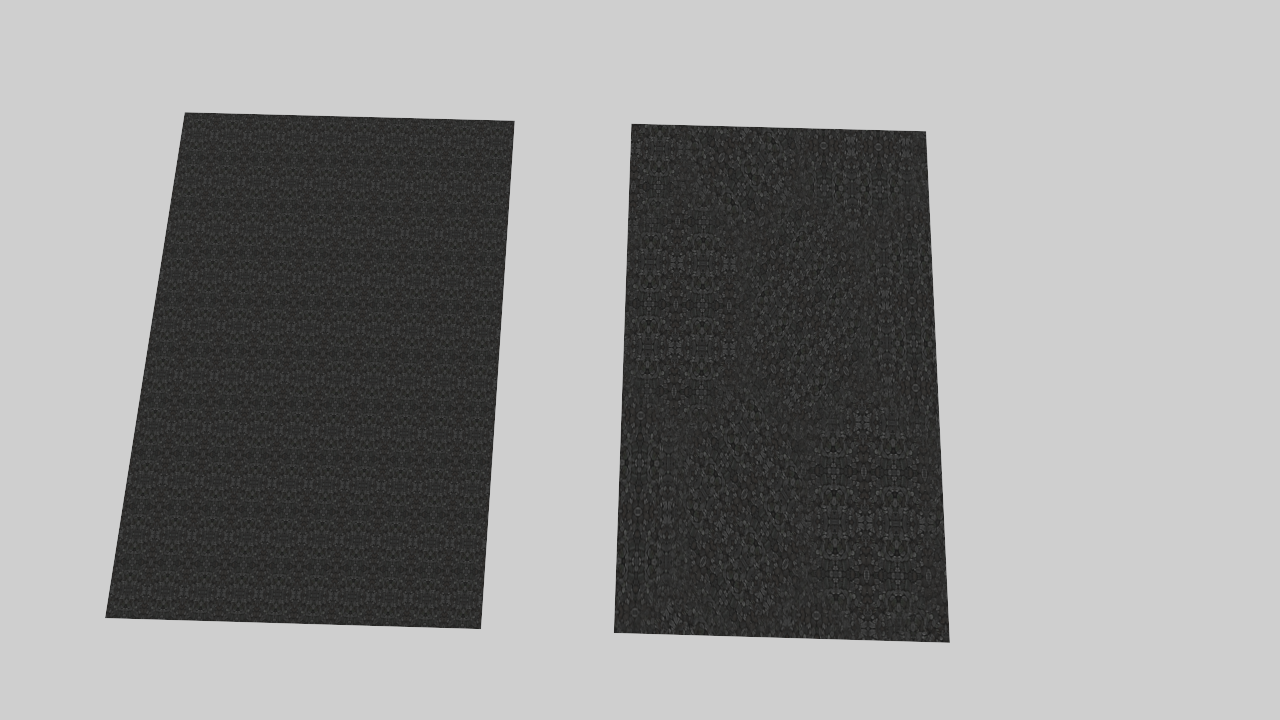
The image below shows the difference. On the left, the texture repeats in an obvious pattern. Our plugin generated a new texture and let me remove the visible repetition in one step. I didn’t train the model from scratch, but spent about two months fine-tuning a less expensive open-source one.
Project 02 — Other workflow problems
That first result made me want to try more ideas, including a plugin for organizing the material editor and one for manipulating lines more easily in 3D space. I built several of these by experimenting with AI-assisted coding.
An open-source plugin I released
Animating points in Cinema 4D can be awkward. For effects such as a form being shaped like pottery, I wanted to move individual points more easily. I made a plugin that connects them to external Null objects, letting me control them through parent-child relationships.
Around this time I began seeing problems a plugin couldn’t fix. That was one reason I went on to cofound Antipixel.